Overlay Boards for Water Underfloor Heating
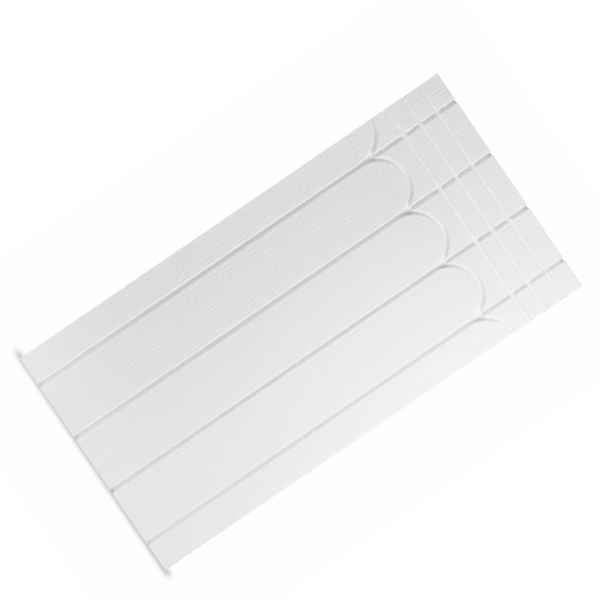
Overlay boards provide a practical, low-profile way to install water underfloor heating systems over existing floors. Pre-routed pipe channels allow fast installation without the need for traditional screeds, making them ideal for renovation and retrofit projects where floor height must be kept to a minimum.
Before the final floor finish is installed, the boards should be primed and covered with a suitable self-levelling compound. In most cases this will be around 5–10mm depending on the floor finish and installation method.
This levelling layer helps improve structural support, promotes more even heat distribution, provides a gentler transition of heat through the floor, and creates a more suitable installation surface for tiles, wood, vinyl and carpet finishes.
Not sure which overlay board you need?
Tiles or stone → cement faced boards
Laminate or engineered wood → foil faced boards
LVT, vinyl or carpet → cement faced boards require a 10mm self-levelling layer above the primed boards
Need help choosing quantities or layout? We can assist with free system design advice when you order from us.
Shop Overlay Board Types
Why Use a Self-Levelling Layer Over Overlay Boards?
- Improves structural support across the floor build-up
- Promotes more even heat distribution
- Creates a gentler thermal transition, especially useful beneath wood floors
- Provides a decoupling layer for tiled floors if tiles ever need replacing
- Creates the correct installation surface for LVT, vinyl and carpet
Benefits of Low Profile Overlay Systems
- Low floor build-up ideal for renovation projects
- Fast heating response compared to screeded systems
- Integrated insulation improves heating efficiency
- Clean dry installation without full wet screed build-up
- Compatible with tiles, laminate, engineered wood, LVT, vinyl and carpet when the correct levelling layer is used
Popular Types of Overlay Boards
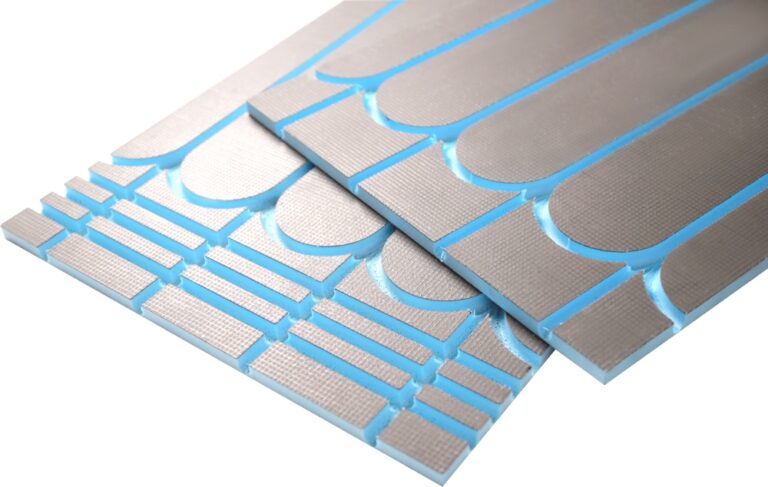
Cement coated boards combine insulation with a reinforced cement surface to create a strong and stable base within the floor build-up.
A common choice is the 20mm cement coated XPS300 overlay board. For pipe returns and doorway sections, the transition board allows pipe to return neatly back to the manifold.
Before tiling, the boards should be primed and covered with a suitable self-levelling compound, typically within the 5–10mm range depending on the floor finish and build-up. This helps improve support, spread heat more evenly and creates a useful decoupling layer within the system.
- Strong reinforced board construction
- Excellent base for tiled floor build-ups
- Helps support a stable and durable finished floor
- We recommend Mapei Eco Prim Grip Primer & Mapei Ultraplan Renovation Screed (or similar)
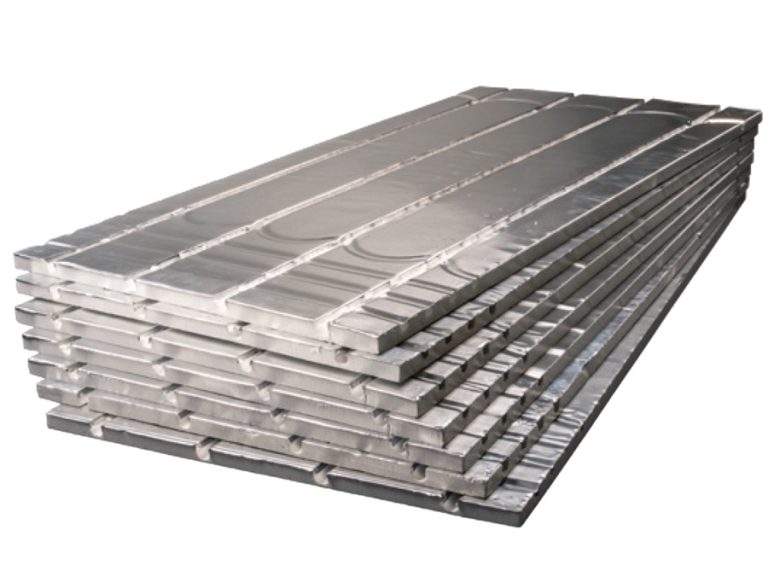
The foil coated boards are designed for laminate, engineered wood and other floating floor build-ups.
A popular option is the 20mm foil coated XPS400 board. These boards should also be primed and covered with a shallow self-levelling layer before the final finish is installed. This helps improve structural support and provides a gentler, more even transition of heat, which is especially beneficial beneath wood floor finishes.
- Lightweight installation
- High compressive strength insulation core
- Well suited to laminate and engineered wood systems
Overlay Board Comparison
| Feature |
Cement boards |
Foil boards |
| Best suited to |
Tile and stone build-ups |
Laminate and wood build-ups |
| Levelling layer required |
Yes, typically 5–10mm depending on finish |
Yes, typically 5–10mm depending on finish |
| Main benefit |
Stable support and decoupling for tiled floors |
Gentler heat transition for wood floors |
| Installation type |
Bonded floor build-up |
Floating floor build-up |
Floor Finish Compatibility Guide
| Floor finish |
Recommended board |
Build-up guidance |
| Tiles |
Cement faced boards |
Prime boards, then apply suitable self-leveller, typically 5–10mm |
| Stone |
Cement faced boards |
Prime boards, then apply suitable self-leveller, typically 5–10mm |
| Laminate |
Foil faced boards |
Prime boards, then apply shallow self-leveller for support and gentler heat transfer |
| Engineered wood |
Foil faced boards |
Prime boards, then apply shallow self-leveller for support and gentler heat transfer |
| LVT / Vinyl |
System dependent |
Prime boards, then apply 10mm self-leveller. Never lay directly onto boards |
| Carpet |
System dependent |
Prime boards, then apply 10mm self-leveller. Never lay directly onto boards |
Common Uses for Overlay Boards
- Bathrooms and kitchens with tiled floors
- Living rooms with laminate or engineered wood
- Retrofit heating installations in older homes
- Extensions and refurbishments with limited floor height
- Upstairs heating systems requiring lightweight solutions
- LVT, vinyl and carpet installations where a smooth 10mm levelling layer is required above the boards
Complete Underfloor Heating System
If you are planning a full project, we can also help with pipe layout design, manifold position and zoning advice so the system is sized correctly before installation begins.
Why buy from The Underfloor Heating Company?
- Low-profile retrofit solutions for a wide range of floor finishes
- Helpful advice on product selection and floor build-up
- Complete systems available including boards, pipe, manifolds and controls
- Support before you buy so you can choose the right system first time
Installation Guide
Download the Overlay installation manual for step-by-step guidance on board layout, pipe installation and floor finishes.
Typical Overlay System Floor Build-Up
The table below shows a typical floor build-up for common floor finishes when installing a water underfloor heating overlay system. Exact levelling thickness may vary slightly depending on the specific product and floor finish manufacturer recommendations.
| Layer (Top to Bottom) |
Tiles / Stone |
Laminate / Engineered Wood |
LVT / Vinyl / Carpet |
| Floor finish |
Ceramic or porcelain tiles |
Laminate or engineered wood flooring |
LVT, vinyl flooring or carpet |
| Intermediate layer |
Flexible S2 tile adhesive |
2-3mm Breathable Underlay (if required) |
Appropriate adhesive or carpet underlay |
| Self-levelling compound |
Typically 5–10mm |
Typically 5–10mm |
10mm required |
| Overlay board layer |
Cement coated overlay board |
Foil faced overlay board |
Overlay board system |
| Heating pipe |
16mm pipe installed within routed board channels |
16mm pipe installed within routed board channels |
16mm pipe installed within routed board channels |
| Subfloor |
Existing structural floor (timber or concrete) |
Existing structural floor (timber or concrete) |
Existing structural floor (timber or concrete) |
Overlay Board FAQs
Below are some of the most common questions about UFH overlay boards, including why you use self levelling compound and what to use with different floor finishes.
Q1: Do overlay boards need to be primed and levelled before the final floor is installed?
Yes. The boards should be primed first, then covered with a suitable self-levelling compound. In most cases this will be around 5–10mm depending on the floor finish and installation method.
Q2: Why use self-levelling compound over overlay boards?
It improves structural support, helps spread heat more evenly, provides a gentler heat transition through the floor and creates a more suitable surface for the final floor finish.
Q3: Can tiles be laid directly onto overlay boards?
For best results, the boards should be primed and covered with a suitable self-levelling compound before tiling. This also creates a useful decoupling layer within the floor build-up.
Q4: Can laminate or engineered wood be installed directly over overlay boards?
The boards should be primed and covered with a shallow self-levelling layer first. This helps improve support and provides a gentler heat transition, which is especially beneficial beneath wood floors. Alternatively, a cheaper option is to lay a breathable underlay onto the boards and float the planks over.
Q5: Can LVT or vinyl be laid directly onto overlay boards?
No. LVT and vinyl should never be laid directly onto the boards. A 10mm self-levelling layer should be applied above the primed boards first.
Q6: Can carpet be fitted over overlay boards?
Yes, but not directly. Carpet should be installed over a 10mm self-levelling layer applied above the primed boards. Carpet & underlay combined must not exceed 2tog.
Q7: Are overlay boards suitable for retrofit heating?
Yes. They are specifically designed for projects where traditional screed systems are not practical and floor build-up needs to be kept low.

 Next Day Delivery
 100% Secure Shopping
 Price Match
 Lifetime Warranty
 30 Day Returns