

If you’re considering underfloor heating, one of the first questions you’ll ask is:
“How long does underfloor heating take to install?”
The honest answer? It depends on the type of system, the size of the space, and whether you’re renovating or building from scratch.
The good news is that modern systems — especially low-profile overlay kits — can often be installed much faster than people expect.
In this guide, we’ll break down realistic installation timeframes for electric and water underfloor heating systems, explain what affects the timeline, and help you understand what to expect for your project.
What Affects Underfloor Heating Installation Time?
Several factors influence how long an underfloor heating system will take to install:
• The type of system (electric vs water)
• The floor construction (screed vs overlay)
• The size of the room or property
• Whether it’s a retrofit or new build
• Subfloor preparation requirements
• Drying or curing times
Understanding these variables helps set realistic expectations and avoid unnecessary delays.
Electric Underfloor Heating Installation Time
Electric underfloor heating is typically the fastest option to install.
It’s commonly used in:
• Bathrooms
• Kitchens
• Small renovations
• Single-room upgrades
Typical Installation Timeline
For a standard bathroom or small kitchen:
• 1 day to lay the heating mats or cables
• Flooring (such as tile adhesive) can usually be applied the same day
• 24–48 hours before switching the system on (to allow adhesives to cure properly)
Electric systems do not require pipework, manifolds, or connection to your central heating system. This significantly reduces installation complexity.
Why Electric Systems Are Quicker
• No water pipes to route
• No screed drying period
• Minimal floor height increase
• Straightforward thermostat wiring
For many homeowners, electric underfloor heating can be completed within a single working day — making it ideal for smaller spaces or quick renovation projects.
Water Underfloor Heating (Wet System) Installation Time
Water underfloor heating systems circulate warm water through pipes beneath the floor surface. These are most commonly installed in:
• New builds
• Large renovations
• Ground floor refurbishments
• Open-plan living areas
Installation Timeline for Screed Systems
For a typical ground floor installation:
• 2–4 days to lay insulation, pipework and manifold
• Screed is poured over the system
• 3–7 days before light foot traffic
• 21–28 days drying time before full heating commissioning
The key factor here is the screed drying time. While the pipework itself can be installed quickly, traditional sand and cement screed requires several weeks to dry properly before the heating can be gradually brought up to temperature.
This curing process is essential to avoid cracking or damaging the floor finish.
Larger Properties
For whole-house installations, installation may take:
• 3–5 days for pipework installation
• 3–4 weeks total before the system is fully operational
Although this sounds lengthy, most of the waiting time relates to floor curing rather than labour.
Overlay (Low Profile) Underfloor Heating Installation Time
Overlay systems are designed specifically for retrofit projects. They sit on top of the existing subfloor and eliminate the need for deep screed.
This makes them one of the fastest-growing solutions in the UK.
Typical Overlay Installation Timeline
For a 40–60m² ground floor area:
• 1–2 days to install
• No long screed drying period
• Flooring can be laid shortly after installation
• Heating can often be commissioned within a few days
Overlay systems are ideal when:
• Floor height build-up must be minimal
• You don’t want to excavate existing floors
• You need a faster turnaround
• The property is already occupied
Because there is no thick screed layer to dry, overall project time is dramatically reduced compared to traditional systems.
Comparison: How Long Does Each System Take?
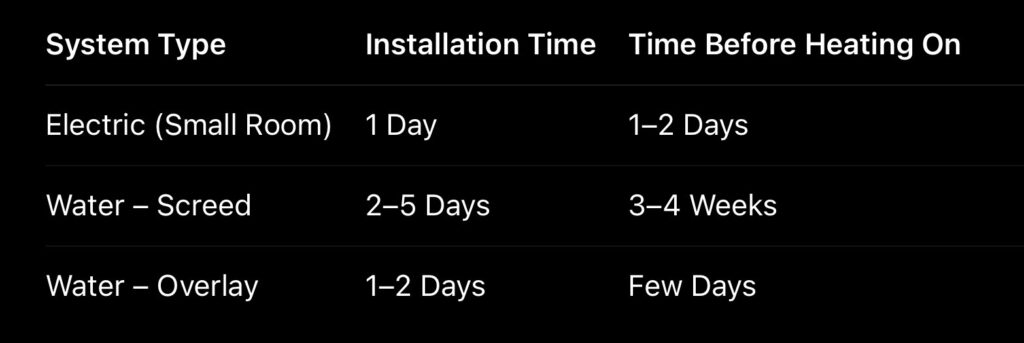
For many renovation projects, overlay systems provide the best balance between efficiency and performance.
What Can Slow Down Installation?
While underfloor heating installation is often straightforward, certain factors can extend the timeline:
- Subfloor Preparation
Uneven or damaged subfloors may require levelling before installation.
- Removal of Existing Flooring
Old tiles, timber or screed may need to be removed first.
- Electrical or Plumbing Scheduling
Electric systems require a qualified electrician to connect thermostats.
Water systems require plumbing integration with your heat source.
- Large Open-Plan Areas
Bigger areas require more pipework and zoning, increasing labour time.
- Drying Conditions
Cold or damp environments can extend screed drying times.
Planning ahead and choosing the correct system for your project will significantly reduce delays.
Is Underfloor Heating Installation Disruptive?
In most cases, installation is less disruptive than people expect.
Electric systems cause minimal disturbance and are ideal for room-by-room upgrades.
Overlay systems allow renovation without digging up deep floor structures.
Traditional screed systems are more involved, but they are typically completed during early build phases in new properties.
Working with an experienced supplier ensures the system is correctly designed from the start — preventing costly delays or redesigns later.
Can Underfloor Heating Be Installed in an Existing Home?
Yes.
Modern overlay systems and low-profile solutions mean underfloor heating can be retrofitted into many existing homes without major structural changes.
In fact, many UK homeowners now upgrade kitchens, bathrooms and extensions with underfloor heating as part of standard renovations.
Installation time will depend on floor access and preparation, but most retrofit systems are completed within a few days.
Final Answer: How Long Does Underfloor Heating Take to Install?
For most projects:
A single room electric system can be installed in 1 day.
A retrofit overlay system typically takes 1–2 days.
A full screed water system may take several days to install, with 3–4 weeks before full heating activation due to drying time.
The actual installation is often quick — it’s the curing process (in traditional systems) that takes longer.
Choosing the right system for your property is the key to keeping timelines short and projects stress-free.
Need Help Choosing the Right System?
Every home is different. The correct underfloor heating system depends on:
• Floor build-up
• Heat source
• Insulation levels
• Room size
• Renovation plans
If you’re unsure which solution suits your project, speaking to a specialist supplier can save time, money and complications later.
Whether you’re upgrading a bathroom or installing underfloor heating across a full ground floor, understanding the installation timeline helps you plan with confidence.
Let’s Get Your Project Moving
Whether you’re renovating a single room or building from scratch, we’ll help you choose the right system — and give you a clear, realistic installation timeline.
Contact The Underfloor Heating Company today and get started.
🔹 Free expert advice
🔹 Fast UK delivery
🔹 Trusted by homeowners & trade professionals
 Next Day Delivery
 100% Secure Shopping
 Price Match
 Lifetime Warranty
 30 Day Returns